High street banks are not so different from other businesses.
What sets them apart is that they make their money... from dealing with money. They look after it, lend it and help you pay for things with it.
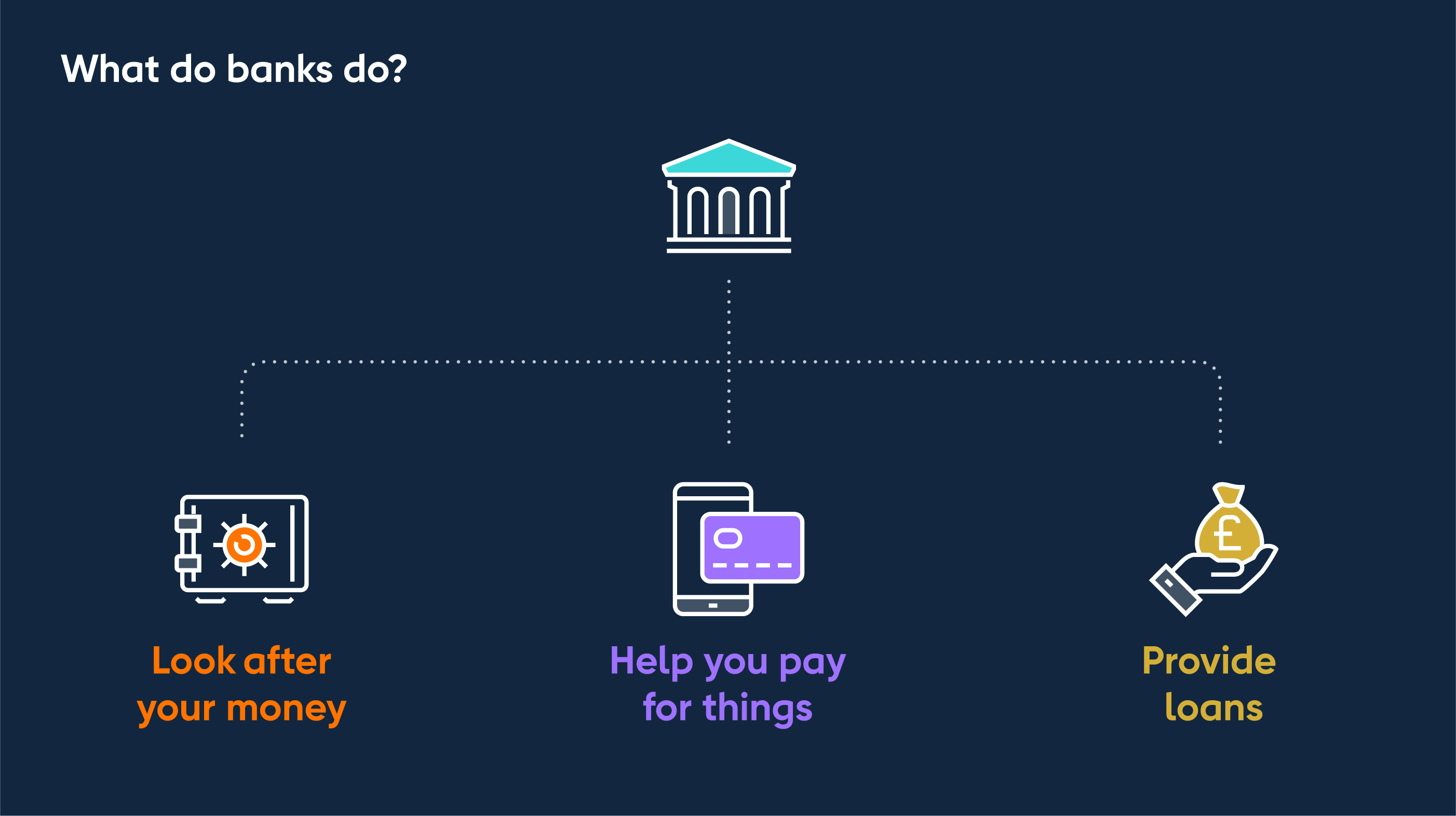
Look after your money
Keeping small amounts of money in your pocket to pay for things makes sense. But holding larger amounts that way are risky because the cash could get lost or stolen
Many banks today offer free safekeeping services, with no charge for using a current account. In return, they can use the money stored with them to earn a profit, eg by lending it to other people or investing it.
We make sure banks operate in a safe and sound way so that your money is there when you need it. And should the worst happen and your bank goes out of business, you could claim up to £120,000 of your money back through the Financial Services Compensation Scheme.
The deposit protection limit rose from £85,000 to £120,000 on 1 December 2025.
Lend money
Banks provide loans for many things, whether you are a family wanting to buy a house or a business trying to hire more people and expand. In this way, the flow of lending can help the economy as a whole to thrive.
It's a risky business, though. Banks can lose money if someone they have lent to doesn't pay it back.
They are well aware of this, so they try to guarantee they make enough profit by charging more interest for lending money than they pay out on people's savings. Interest is either the charge for borrowing money or the reward for saving.
Of course, some loans are riskier than others – and banks will charge higher interest rates to reflect this.
But no one can predict the future. Inevitably, banks can get it wrong: sometimes a large number of loans will not be repaid. So, the Bank of England makes sure they set enough money aside in case they face larger losses than expected. That is part of ensuring they operate in a safe and sound way.
Help you pay for things
Banks provide debit and credit cards so you can make purchases in shops and online.
When you use a card to buy, let's say, food, the money is transferred from your bank account to the shop's bank account. Exactly the same thing happens when you use it online.
When you include payments for much bigger items, such as houses, and all the financial activity between banks and other financial situations, more than £500 billion moves between accounts every day. That's more than £5 million a second.
The stakes are very high: without these payments, the entire economy would grind to a halt. The Bank makes sure they run smoothly by overseeing the services (eg Visa) and core systems (eg CHAPS) that allow people, businesses and banks to make large transfers.
What else?
Looking after money, lending it and helping you pay for things are the main ways that people use banks in their daily lives.
Banks do other things too. Most investment banks, for example, trade shares, foreign currencies and commodities (such as oil or gold) in financial markets on behalf of their clients.